How a determined toddler, a traced hand, and a few animal drawings changed the way I teach music.
In 2002, I was teaching at a music school in Edmonton, Canada. Most of my students were between the ages of six and sixteen. I was comfortable with that range, and I had a set of expectations for when a child was ready to begin their musical journey.
One day, a parent dropped off their children but brought along a little girl who wanted to ask me something. Usually, questions about starting lessons come from the parents, but this time, the question came directly from the child. In a tiny voice, she asked: "Can I start piano lessons?"
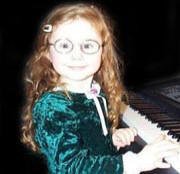
While I knew some teachers specialized in toddlers, I had never taken on students that young. I politely declined. But Diana wasn't ready to end the conversation. She looked at me and asked, "Why?"
I wanted to give her an answer she couldn't dispute, so I told her the reason she couldn't start piano lessons was that she didn't know how to count to twenty. Silence followed. I thought the problem was solved.
The following week, Diana's mother told me that her daughter had something to tell me. As I leaned in, Diana began to count. She got from one to ten with no issues. Then, she paused and continued naming two digit numbers, but they were completely out of order.
Her mother and I couldn't help but laugh. The moment wasn't funny in a mocking way, but the sheer determination on Diana's face was wonderful. I made a hand motion to signal her to stop, smiled, and told her, "Yes, you can start piano."
That was easier said than done. Diana was in the pre-reading stage and couldn't read any of my instructions, and there wasn't a book on the market that could accommodate a child so young. I had to find a different way.
I pulled a sheet of paper from the copy machine and traced the outline of her right hand. Above her thumb, I drew a camel. Above her index finger, a dolphin, and above her middle finger, an elephant.
She recognized the animals instantly. I placed her hand on the keys, and as I pointed my pen to an animal, she played the note. I was honestly surprised. Even with beginners, pointing along is rarely a simple task, but Diana played every animal correctly, every single time.
By the next week, I added a fish and a giraffe. This allowed her to play more melodies, and to my amazement, she outgrew those five notes quickly. To expand our "musical zoo," I added a bird and an alligator. Again, she had no problem extending her thumb and pinky to hit the notes correctly. I knew then that we had found something special.
By early summer, Diana was playing so well that I invited her to perform in our year-end concert. She was the very first performer on stage in a school auditorium filled with about 200 people, including parents, relatives, and students.
Her mother helped her onto the piano chair and placed a single sheet of paper on the music stand. Diana played her own seven-note composition. The room erupted in applause, and the audience even requested that she play it a second time. I will never forget that moment.
After the concert, several parents approached me. They wanted to enroll their own toddlers because of what they had seen Diana achieve. I spent the following summer break revising and refining this method, adding the details necessary to help other children succeed.